Tree-Based Methods

POLI_SCI 490

Machine Learning in Political Science

Exploration ideas

  • Walk yourself through choosing the right tree-based method for your data

  • From next week’s material: Teach yourself how to tune a pre-trained neural network (or similar model) in Python

Plan for today

Digressions

  • Do predictive models need to be causal?
  • Submitting to our AI overlords

Talk

  • From trees to random forests
  • Application readings

Digressions

Do predictive models need to be causal?

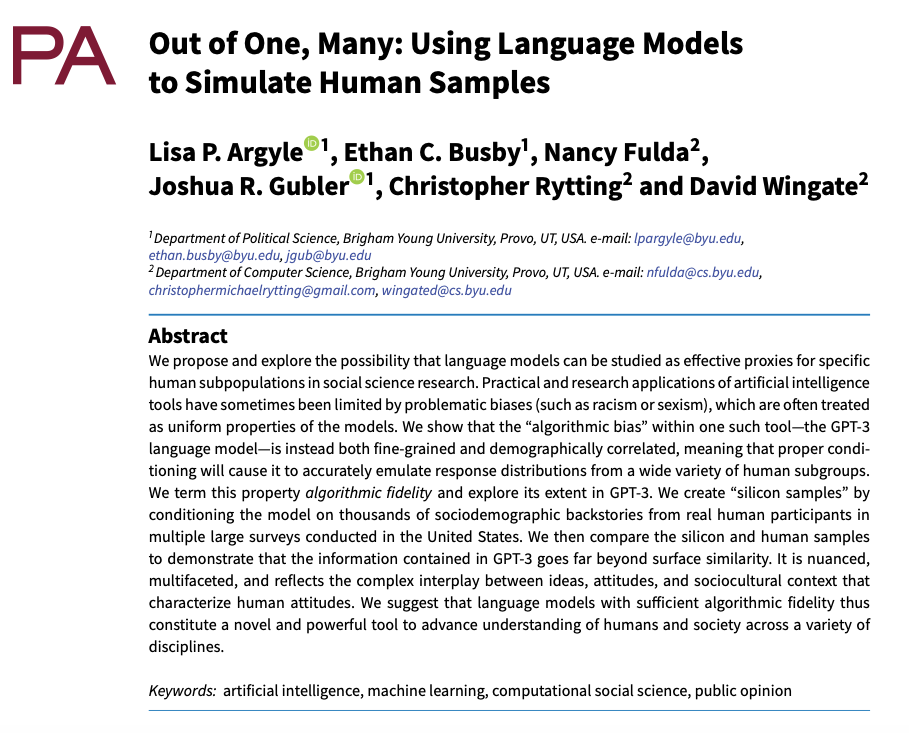
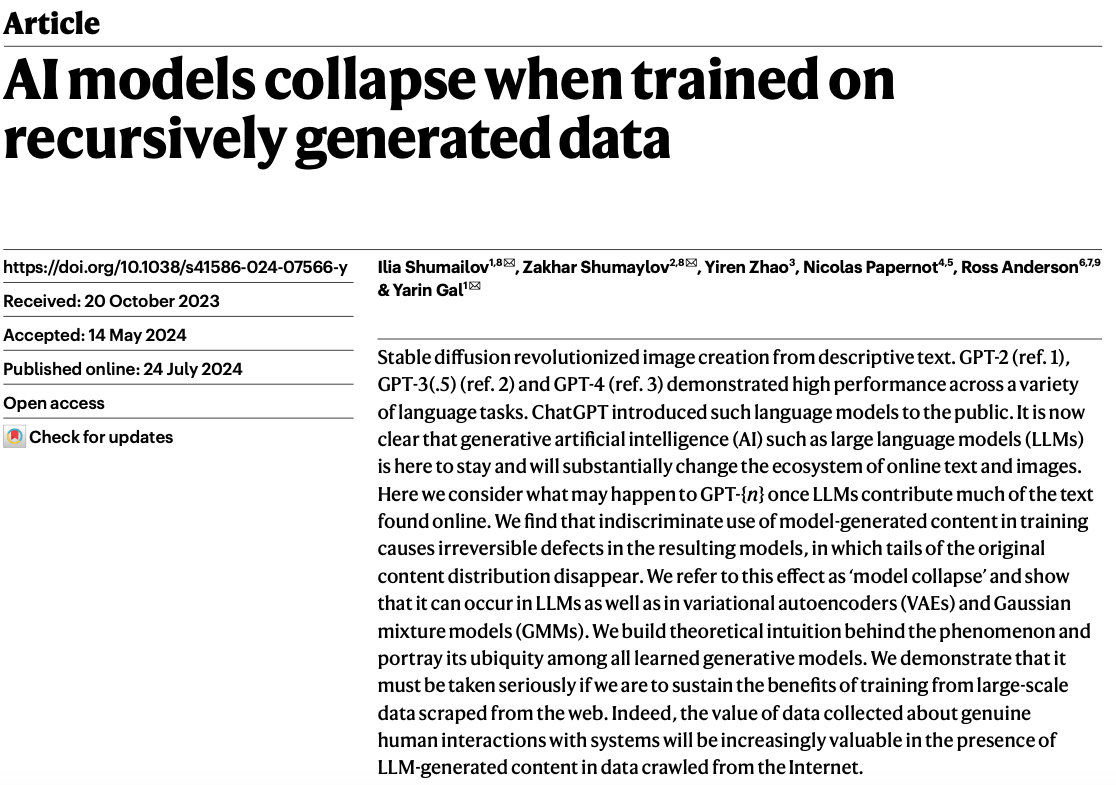
Will AI make my [research expertise] go away?

Maybe?

Maybe not?

Tree-Based Methods

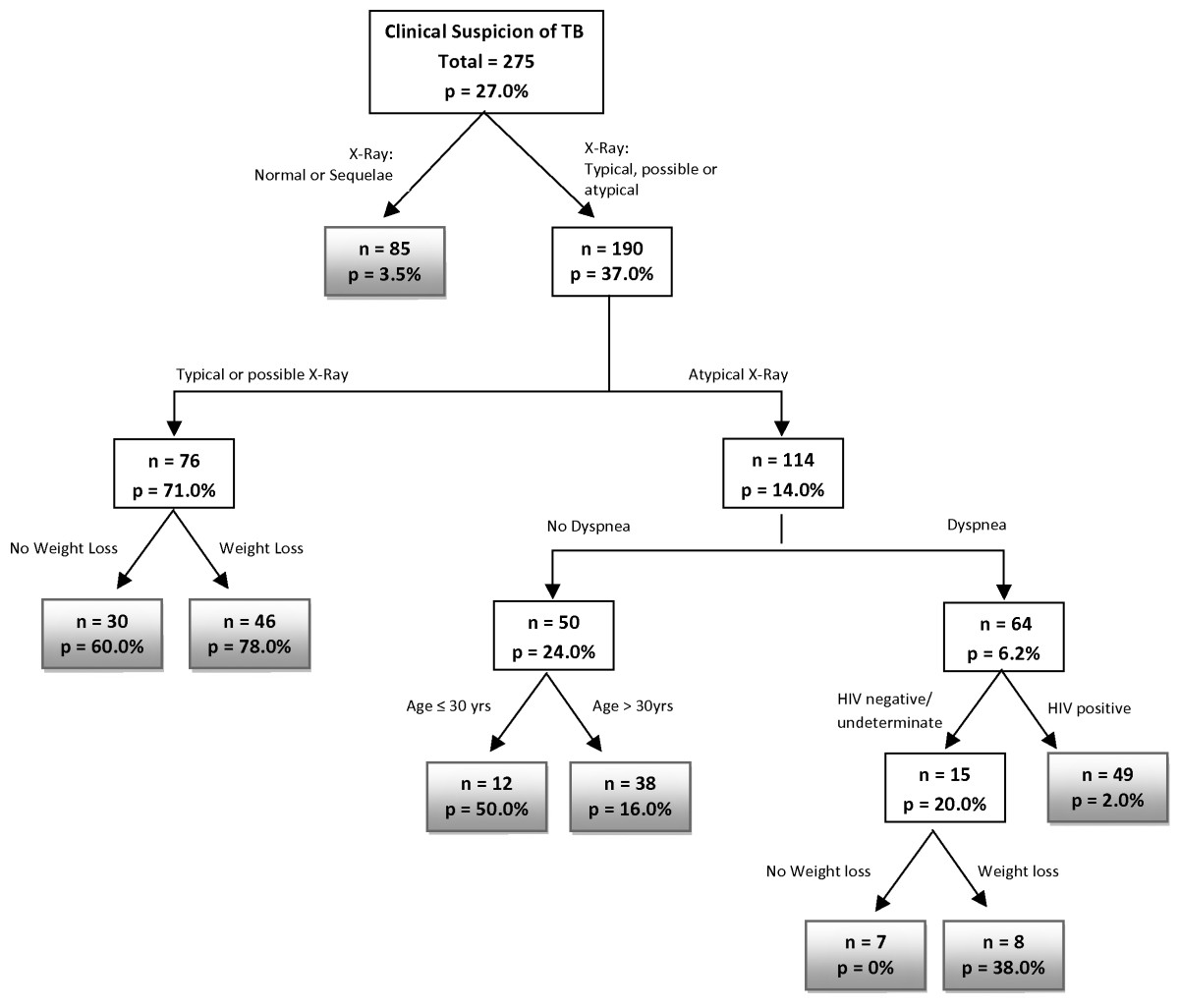
Regression/classification trees

Recursive binary partitioning
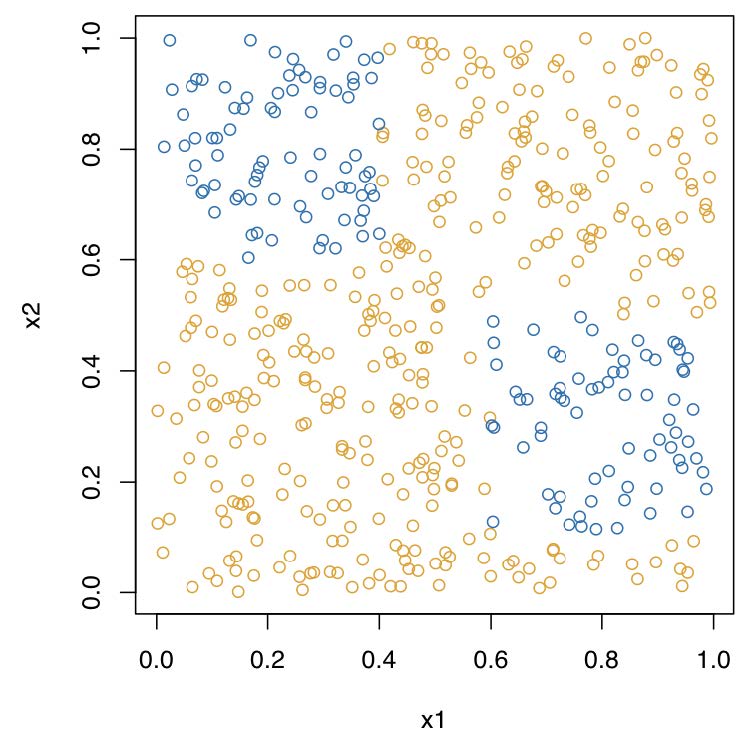
Recursive binary partitioning
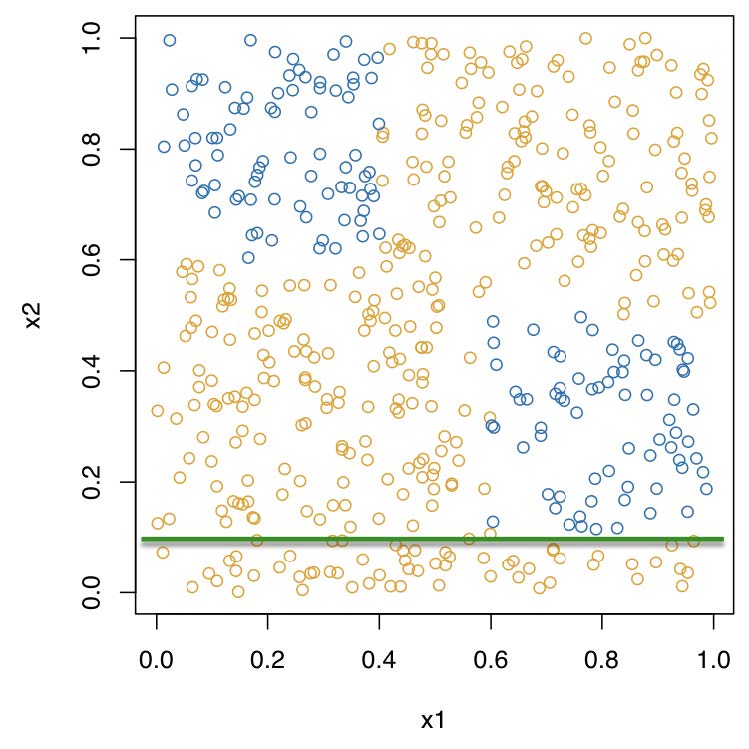
Recursive binary partitioning
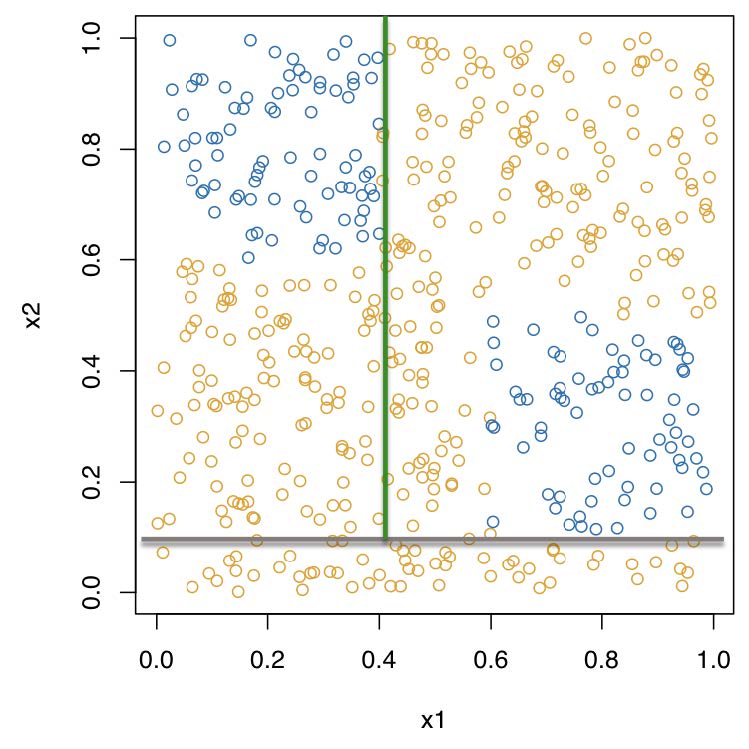
Recursive binary partitioning
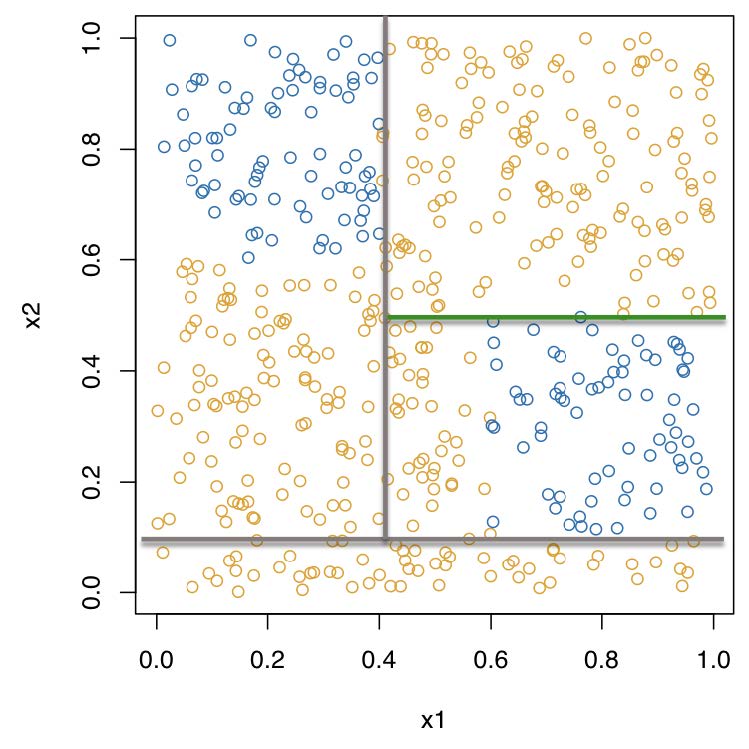
Recursive binary partitioning
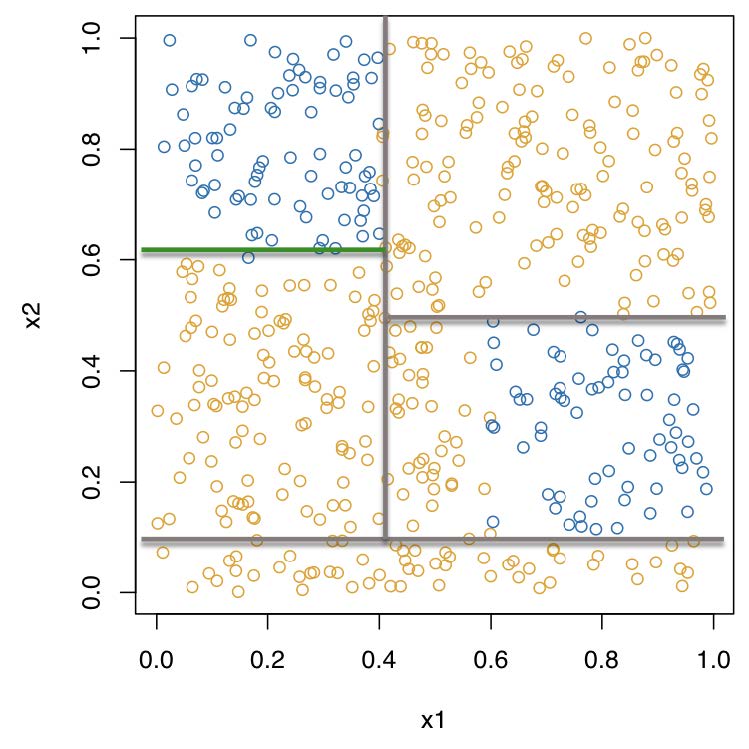
Recursive binary partitioning
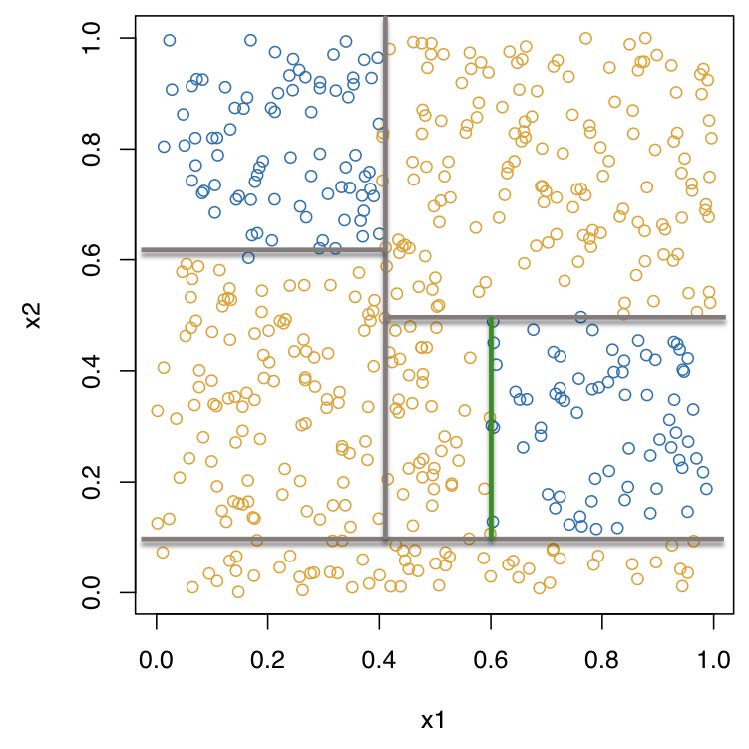
Problems?

Deep trees overfit on the training data

Shallow trees have high bias

How to balance number of splits?

Cost complexity tuning

More problems?

Single trees are greedy

Which leads to poor prediction

Solution: wisdom of the crowds

  • Bagging

  • Random forests

  • Boosting

  • BART

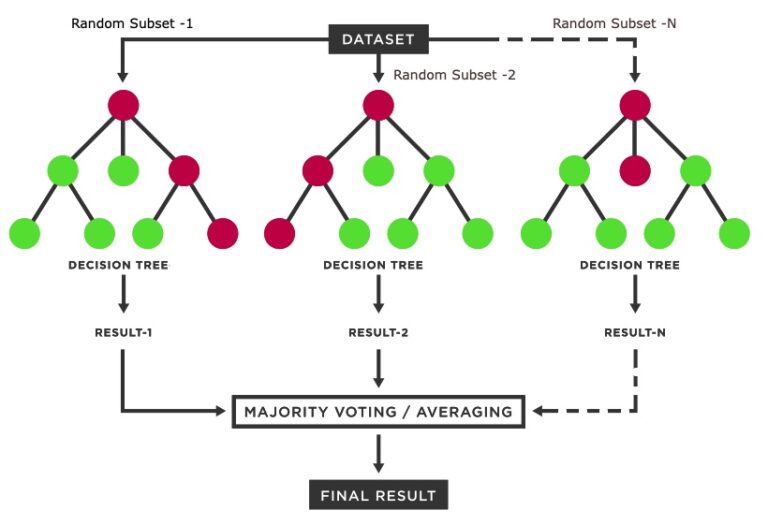
Bagging

Bootstrap AGGregatING

Here’s the magic

  • Every bootstrap resample contains about 2/3 of the data on average

  • The remaining 1/3 are out-of-bag observations (OOB)

  • OOB observations are a natural test set for each boostrap resample

  • Each OOB observation gets B/3 predictions

  • Which we can average/majority vote to evaluate test performance

Problem?

Bootstrap resamples are correlated!

Bagged trees can get stuck on local optima

Solution: Decorrelate trees

Random forests

  • Draw B bootstrap resamples

  • For every split in each of the B trees, draw \(m\) random predictors as candidates for the split

  • Default is \(m = \sqrt{p}\) but can be tuned

  • This creates trees that still use overlapping data, but look very different from each other

  • Improves OOB test error

rand_forest() in {parsnip}

rand_forest(
  mode = "unknown",
  engine = "ranger",
  mtry = NULL,
  trees = NULL,
  min_n = NULL
)
  • mtry: Number of randomly sampled predictors

  • trees: Number of trees (bootstraps)

  • min_n: Minimum number of data points that are required to split a node further

Alternative

Instead of decorrelating trees

Why not treat the overlap in bootstrap resamples as an advantage?

Proposal: Build an ensemble that learns from every bootstrap

Boosting

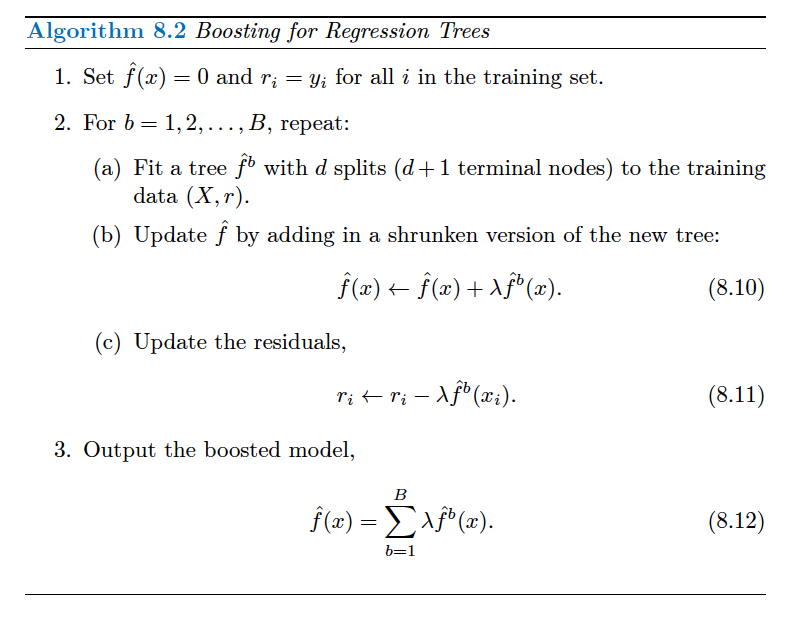
  1. Specify a number of trees \(B\) (these are not bootstrap resamples)

  2. For \(b = 1\) fit the tree as usual to the training data

  3. For \(b = 2, \ldots, B\) replace the outcome with the residuals from the previous tree

  4. Fit a shrunken tree to the updated residuals

  5. Repeat \(B\) times

  6. Create predictions with \(B\)th tree

More formally (ISL p. 347)

Random forest: Decorrelated trees

Boosting: Grow trees sequentially

BART

Bayesian Additive Regression Trees
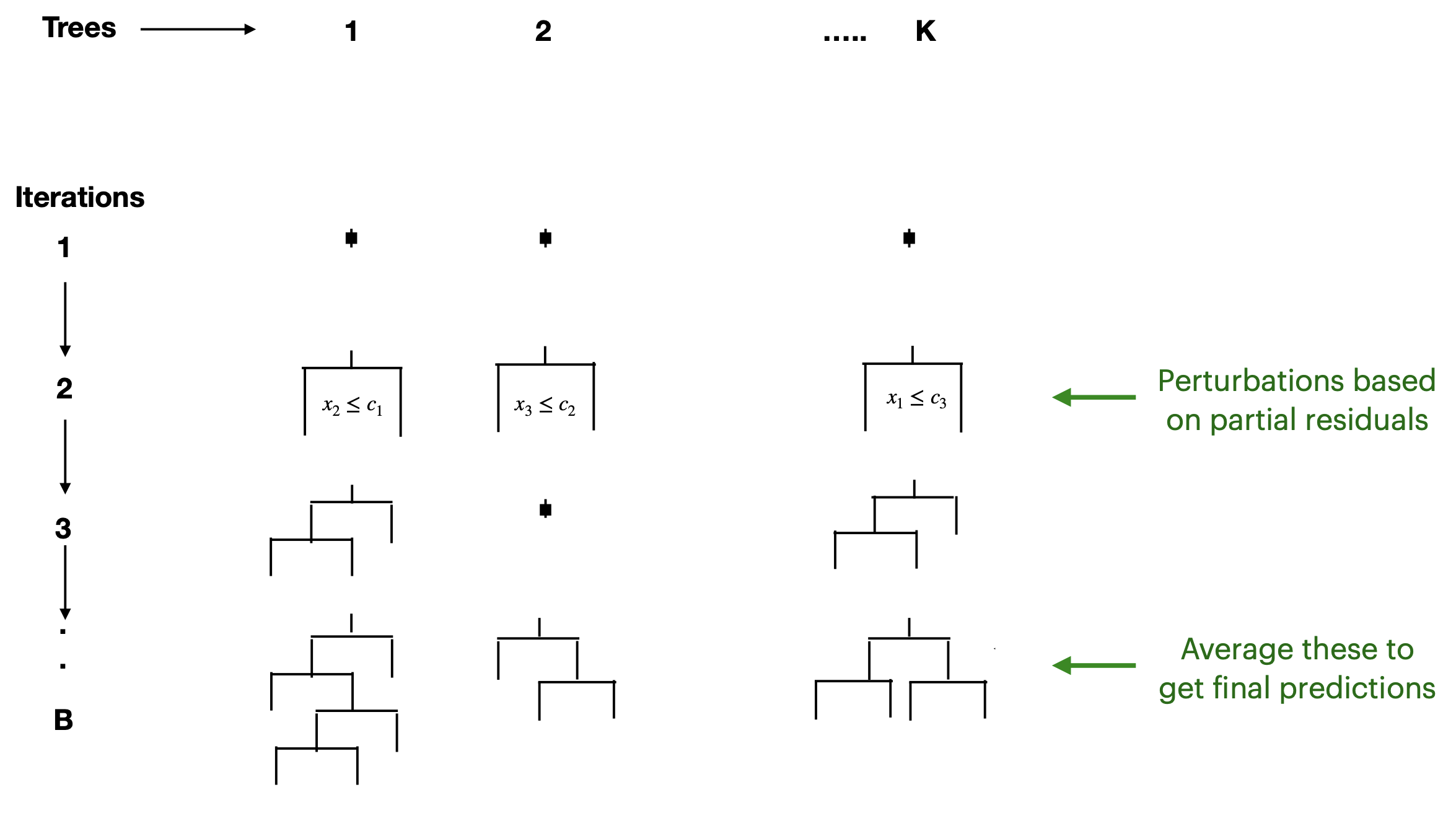
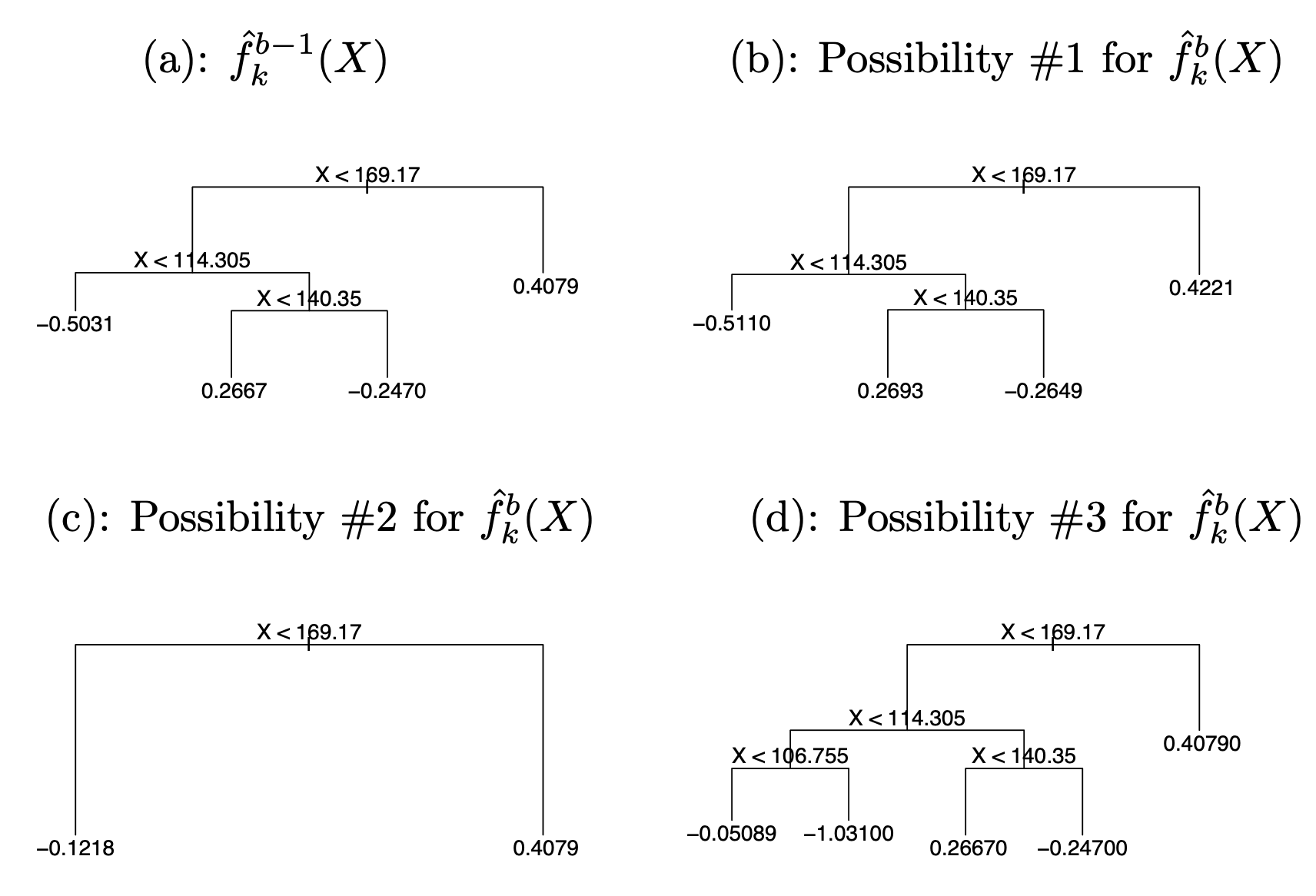
Perturbations?

Four types:

  1. Grow

  2. Prune

  3. Change (cutoff of an internal node)

  4. Swap (splitting rules of two parent child nodes)

Examples of perturbations

What’s different?

  • Output is a collection of prediction models

  • Early predictions are bad, but get better over time

  • We take the average of predictions after \(L\) burn-in iterations

  • Perturbations guard against overfitting on the training data

  • Also: Easier to connect to inferential tasks because we are creating posterior distributions

Extensions

  1. Extreme gradient boosting (XGBoost)

  2. Nodes can be split on whatever quantity of interest you want, like average treatment effects